AEO Growth Playbook
Get cited in Google AI Overviews, ChatGPT, and Perplexity — not just ranked on page one. Entity mapping, answer-ready structure, schema, and freshness signals that drive pipeline, not vanity impressions.
Introduction
Run a free AEO check → Score your page in 30 seconds and see exactly where you stand on entities, schema, and answer-readiness.
Answer engine optimization gets your brand cited in Google AI Overviews, ChatGPT and Perplexity, not only ranked on page one. On a page that means one clear H1, a 40 to 90 word TL;DR that states the direct answer, who it is for and the one key constraint, then five to eight FAQ answers written as H3 questions with short answers, plus schema that matches what is actually on the page. Add FAQPage markup only when the FAQ is visible, and update dateModified when you refresh.
| Pattern | Use-case | Schema |
|---|---|---|
| TL;DR Summary | Quick factual overview + eligibility for quoting | Article |
| FAQ | Answer clusters + objection handling | FAQPage |
| Comparison Table | Choice support on commercial queries | Product or Service |
| Checklist | "what to do next" guidance | HowTo (only if it's true step-by-step) |
| Decision Framework | evaluation criteria, scoring rubric | usually none required |
Ask this article
Answers come only from this page, with sources.
Build entity-rich, schema-driven content that surfaces in Google AI Overviews, Google AI Mode, People Also Ask, and answer engines - without sacrificing CRO.

Introduction
Search has changed. In 2026, I'm no longer optimizing for position one - I'm optimizing for answer inclusion.
With Google AI Overviews, Google AI Mode, Copilot, ChatGPT, and Perplexity serving "best answer" responses at scale, a new layer of visibility is now the default: your content being used (or cited) inside the answer.
The practical implication is brutal: you can "rank" and still lose the click - or never get the click and still influence pipeline. So the job shifts from "get traffic" to:
- be the source the model trusts
- be the brand it mentions
- be the page it cites when citations are shown
This guide keeps the core of my 2025 framework, but updates it for the 2026 reality: AI Mode's multi-step sessions, stronger freshness bias, platform-specific citation behavior, multi-modal sources (YouTube/audio), and measurable AI visibility KPIs.
Quick Start: Before diving into the framework, check your current AEO score with the free instant analyzer at the top of this page. It takes 30 seconds and shows exactly where you stand on entities, schema, and answer-readiness.
The State of AEO in 2026 (and why it's not "just SEO" anymore)
AEO (Answer Engine Optimization) is the discipline of making your content easy for retrieval systems and language models to trust, extract, and reuse as an answer.
Classic SEO cared about: rankings, CTR, and sessions.
AEO adds: answer inclusion, citations, brand mentions, and assisted conversions.
AEO vs GEO - what's the difference in 2026?
You'll hear both terms:
- GEO (Generative Engine Optimization) is the umbrella: optimizing for generative systems that synthesize responses across sources.
- AEO is the sharp end of the spear: entity-first, answer-focused optimization designed to make your content quotable, citable, and safely reusable inside those generative systems.
In practice: GEO is the category. AEO is the operating system you can implement on pages, assets, and entity footprint.
What changed since 2025 (the update you actually need)
If you only update one thing from the old playbook, update this:
- Terminology and surfaces
Stop thinking "SGE". The relevant surfaces are Google AI Overviews and Google AI Mode - with different behaviors and citation patterns. - Platform behavior is not uniform
"Optimize for answer engines" is too generic now. ChatGPT, Perplexity, Google AI Mode, and Copilot pull from different sources, reward different proof, and show citations differently. Platform-specific strategy is mandatory. - Freshness + entity consistency moved from "nice-to-have" to ranking lever
If your service definitions, pricing, positioning, and entity footprint disagree across your site, listings, and third-party sources, you increase the odds of (a) not getting cited, or (b) getting cited with wrong info.
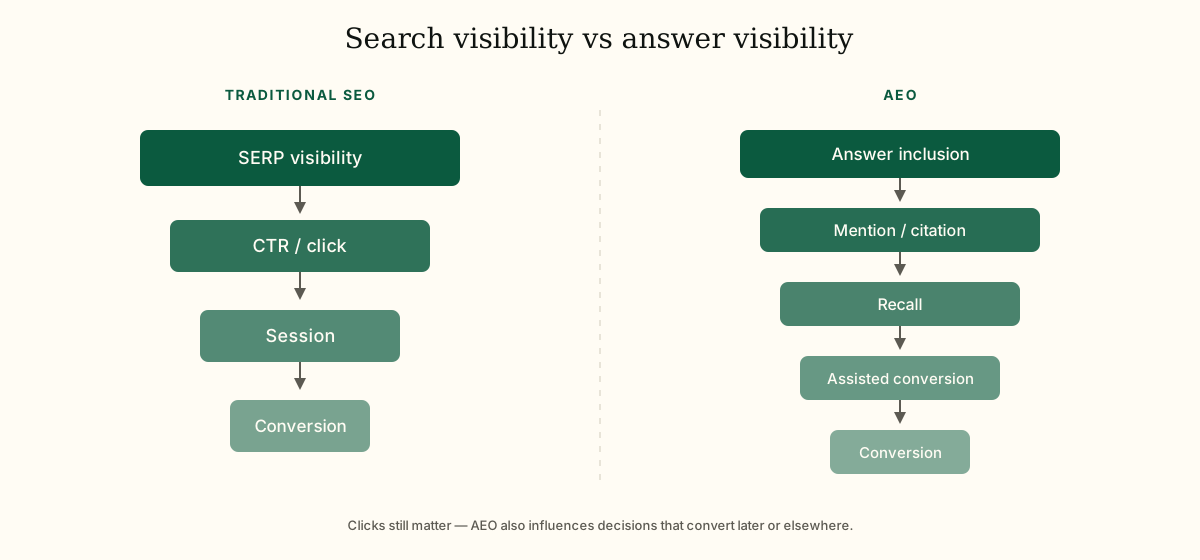
The new funnel: Search visibility vs answer visibility
Traditional SEO funnel: SERP visibility → click → session → conversion
AEO funnel: answer inclusion → mention/citation → recall → assisted conversion → conversion (sometimes later)
How AEO pages get selected (simple mental model)
Answer engines favor pages that reduce risk:
- clear entity definitions (no ambiguity)
- scannable "answer blocks"
- evidence (data, sources, proofs)
- structured markup (schema + semantic HTML)
- strong "experience signals" (authorship, reputation, UX clarity)
This is what the rest of the playbook operationalizes via the EEE model.
The AEO Framework: Entities, Evidence, Experience (EEE Model)
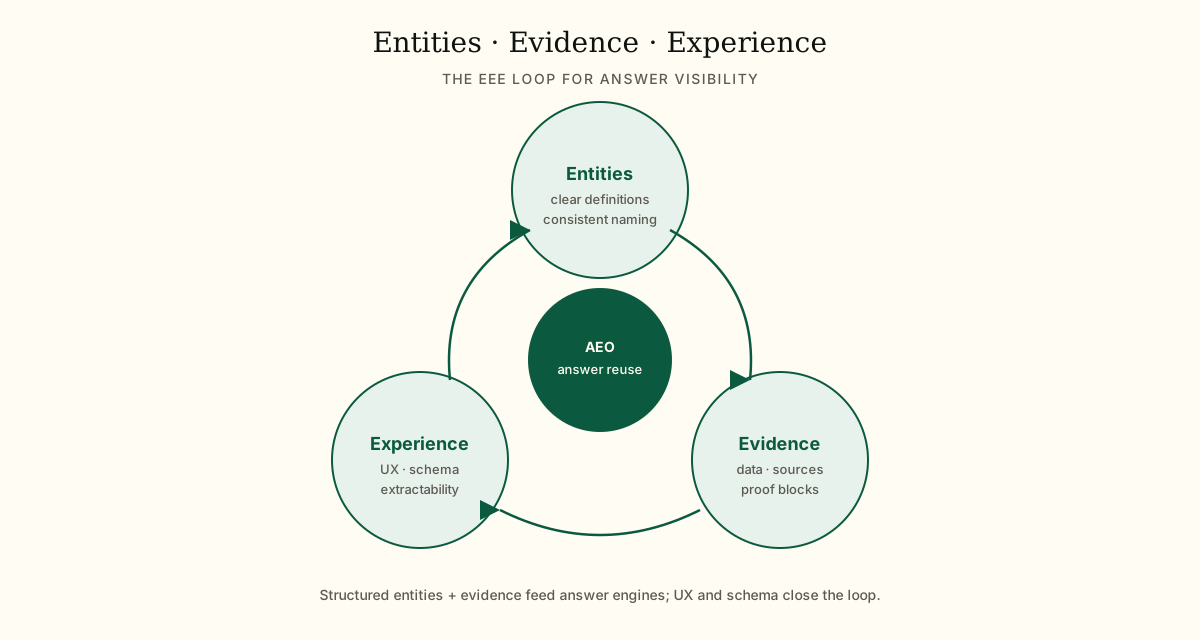
Effective AEO starts with a different mental model - one not built on keywords, but on entities and proof. I use the EEE Model:
- Entities: the topics, tools, problems, and categories your brand touches
- Evidence: the data, references, and structure that validate authority
- Experience: the page UX that reinforces trust and makes extraction easy
Together, these three dimensions determine how confidently an AI system can surface and reuse your content in answers.
💡 Key Insight
The more structured your content is - conceptually and technically - the more likely it is to appear as a cited answer (or a source used to generate one).
Entities: The foundation of visibility
In AEO, I optimize for concepts, not just keywords. That means understanding:
- how your brand is represented in knowledge graphs
- which entities you want to "own"
- how to structure content around entity relationships (not just phrases)
A page about "customer lifetime value" should explicitly name:
- Related concepts (e.g. CAC, churn, retention rate)
- Connected brands (e.g. HubSpot, Mixpanel)
- Supporting formats (calculator, formula, benchmark table)
In 2026, "entity work" is not only on-page. It's also operational: your site, product pages, LinkedIn, YouTube descriptions, profiles, directories, and review platforms need to describe the same entities in compatible terms. If they disagree, you dilute retrievability and trust.
Tools like Google's NLP API, CLV Calculator, and entity extractors help map these links.
Evidence: Structuring for trust
Answer engines prefer content that reads like an expert source, not a marketing page. That means:
- citing first-party or original data where possible
- linking to supporting sources (internal or external)
- formatting statements in clear, retrievable units (think: short blocks that stand alone)
Example:
"In 2025, we audited 50+ B2B SaaS pages. Pages that added (1) a 40–80 word TL;DR block, (2) 5–8 FAQ answers, and (3) updated dateModified saw stronger inclusion in AI answers."
Experience: The UX of inclusion
Even if your content is conceptually sound and well-cited, weak structure limits visibility.
Google AI Overviews, Google AI Mode, and Copilot favor pages that:
- use semantic HTML (headings, lists, tables)
- include schema that defines article type, authorship, and Q&A blocks
- avoid walls of text and chaotic layouts that make extraction risky
(You'll keep CRO - but the page has to stay "extractable".)
Structuring Content for Answer Engines
Let's make this actionable. Here's how to structure pages that actually get used by Google AI Overviews, Google AI Mode, and answer engines like ChatGPT and Perplexity.
1. Start with a TL;DR (40-90 words)
A short block that states:
- the direct answer (definition or conclusion)
- who it's for
- the one key constraint or decision rule
Bad:
"Welcome to our blog post about CRM."
Good:
"CRM implementation for B2B teams usually fails due to tracking gaps, lifecycle segmentation, and unclear ownership. This guide shows the phases, costs, and what to implement first - with a checklist and schema so answer engines can cite it."
Tip: write TL;DR like you want it quoted verbatim.
2. Break content into explicit questions (not vibes)
Answer engines love question patterns. If your page doesn't answer explicit questions, it won't be included.
Examples:
- What is AEO in 2026?
- What's the difference between AEO and GEO?
- How do you optimize for Google AI Overviews vs AI Mode?
- How do you get cited in ChatGPT or Perplexity?
Add:
- H3-style questions with clear answers
- 40-90 word "answer capsules" (direct answer + constraint + next step)
- FAQPage schema only if the FAQ exists on-page
3. Use tables and checklists (extractable = citeable)
Tables help engines extract structured facts. They also improve scannability and CRO.
| Pattern | Use-case | Schema | Example |
|---|---|---|---|
| TL;DR Summary | Quick factual overview + eligibility for quoting | Article | 40-90 word stat-rich block with "who it's for" |
| FAQ | Answer clusters + objection handling | FAQPage | H3 questions + short answers |
| Comparison Table | Choice support on commercial queries | Product or Service (depending on page) | option columns + "best for" rows + trade-offs |
| Checklist | "what to do next" guidance | HowTo (only if it's true step-by-step) | numbered steps or ordered list |
| Decision Framework | evaluation criteria, scoring rubric | usually none required | 5-8 criteria with weights or rules |
4. Add internal linking anchors (entity reinforcement)
Every AEO page should link to:
- one calculator/tool page (reinforces topical authority)
- one service page (captures commercial intent)
- one related resource (expands entity coverage)
This spreads entity equity across your domain and makes your content map easier for crawlers to understand.
5. Close with a summary + "what to do next"
End each page with:
- 3-5 bullet recap
- a short "implementation path"
- a CTA that matches intent (audit, checklist download, consult)
And yes - schema matters, but it's not a substitute for structure and evidence. It's the wrapper that helps engines interpret what you already did well.
Platform-specific AEO: How to optimize for ChatGPT, Perplexity, Google AI, Gemini, and Copilot
"Optimize for answer engines" is too generic in 2026. Each platform pulls from different sources and rewards different trust proxies.
Here's the practical split:
Platform behavior summary (2026)
- ChatGPT
Tends to lean on Bing-indexed sources and heavily referenced entity hubs. It also repeats what it sees consistently across lists, reviews, and high-signal community sources. - Perplexity
Real-time web + citations per answer. Freshness and citeable formatting matter a lot. YouTube and community sources often show up for practical queries. - Google AI Overviews + Google AI Mode
Strong preference for authority and consensus, plus heavy presence of YouTube and certain community surfaces. AI Mode pushes more "next step" journeys and action intent. - Gemini + Copilot
Local and B2B queries tend to lean into structured business identity signals and well-known business sources. GBP quality becomes disproportionately important for anything local/service-based.
The one table you should actually use
| Engine | What it rewards | What you should ship |
|---|---|---|
| ChatGPT | Entity clarity + repeated mentions across trusted sources | Definition pages, "best for" pages, comparisons, strong review footprint, consistent profiles |
| Perplexity | Freshness + citations + clean answer blocks | Regular updates, source links, TL;DR blocks, YouTube + transcripts, structured FAQs |
| Google AI Overviews | Authority + extractable structure | Topic clusters, tables/checklists, schema hygiene, multi-modal support, consensus-aligned claims |
| Google AI Mode | Action readiness + local/commercial context | Clear service packaging, "who it's for/not for", proof modules, local signals, fast UX |
| Gemini | Google ecosystem strength | GBP hygiene, Organization/Person clarity, YouTube reinforcement, strong authoritative references |
| Copilot | Bing ecosystem + business sources | Bing indexing hygiene, structured service pages, list mentions, credible publications |
How to optimize for ChatGPT (what to do first)
- Make sure your money pages are easy to discover (clean indexing, stable canonicals, no accidental blocks).
- Build "entity confirmation" assets:
- tight definitions
- glossary pages
- "X vs Y" comparisons with honest trade-offs
- Win list mentions and reviews:
- partner directories
- credible "best X" lists in your niche
- real reviews with specifics (outcomes, scope, who it was for)
- Keep your positioning consistent across: site, LinkedIn, directories, review platforms. If the model sees 3 different versions of what you do, it will either skip you or describe you incorrectly.
How to optimize for Perplexity (citation-first play)
- Publish pages that read like sources: short claims, clear headings, a small "sources and further reading" block.
- Update frequently where it matters (monthly on AI topics, quarterly on stable frameworks).
- Add multi-modal reinforcement: YouTube videos, transcripts on your site, chapters with question titles.
- Make your answers quotable: 40-90 word answer capsules under question headings. Perplexity rewards pages it can cite cleanly.
How to optimize for Google AI Overviews and Google AI Mode (treat them separately)
AI Overviews:
- win by being a safe source to cite (structure + evidence + clarity)
- answer blocks, tables, definitions, FAQs that match real questions
AI Mode:
- win by being selectable in an action journey
- clear offer packaging, proof, constraints, local/commercial signals
- content that supports follow-ups ("if X, do Y")
If you only optimize for Overviews, you'll underperform in AI Mode.
How to optimize for Gemini and Copilot (local and B2B heavy)
- Tighten your Organization and Person identity: consistent naming, clear service definitions, proof modules.
- For local/service intent: Google Business Profile hygiene, consistent NAP across directories, review velocity + review specificity.
- For B2B: publish decision content (how to choose, vendor criteria, pitfalls), win mentions in credible business sources where possible.
Technical Layer - Schema & Architecture
No AEO strategy is complete without clean structured data and crawlable HTML. Schema is not "for Google" - it's for any system doing retrieval + synthesis.
What changed since 2025
- Google has streamlined some structured data features. Don't chase edge-case markup for vanity SERP enhancements.
- The win in 2026 is fundamentals: entity identity, content type clarity, authorship, and page structure.
Core schema types to focus on (2026)
Keep your "at least three per page" rule, but update the list:
Baseline (most pages):
- Article
- BreadcrumbList
- Organization + Person (author and publisher identity)
Add when it matches the content:
- FAQPage (only if FAQs are visible on the page)
- HowTo (only for real step-by-step content)
- Product (for tools/calculators/SaaS)
- Service (for service pages and commercial intent)
- LocalBusiness (for local/service-area pages)
💡 Key Insight
Schema isn't the strategy. It's the wrapper that lets engines interpret your strategy with less risk.
JSON-LD example - update these fields
Keep your Article block; set: headline to "AEO Growth Playbook 2026…", description to mention Google AI Overviews + AI Mode + platform-specific optimization, datePublished / dateModified to your real dates (update dateModified on refresh), publisher to Organization (not Person) unless you want personal publishing, mainEntityOfPage to the correct canonical URL.
{
"@context": "https://schema.org",
"@type": "Article",
"mainEntityOfPage": {
  "@type": "WebPage",
  "@id": "https://maciejturek.com/resources/aeo-growth-playbook-2025.html"
},
"headline": "AEO Growth Playbook 2026",
"description": "Practical 2026 playbook for Answer-Engine Optimization. Structure content for Google AI Overviews, Google AI Mode, and platform-specific optimization.",
"author": {
  "@type": "Person",
  "name": "Maciej Turek",
  "url": "https://maciejturek.com"
},
"publisher": {
  "@type": "Organization",
  "name": "AmpliGrowth Consulting",
  "logo": {
    "@type": "ImageObject",
    "url": "https://maciejturek.com/assets/images/maciej.jpg"
  }
},
"datePublished": "2025-10-17",
"dateModified": "2026-02-14"
}
(FAQPage block would follow separately if the page includes structured Q&A.)
AI crawler controls (robots.txt) - realistic guidance
In 2026 you should decide what you want:
- If you want citations and inclusion, you generally need your public knowledge pages accessible.
- Block sensitive paths (account, admin, internal docs, staging).
Bots you'll see discussed: GPTBot, ClaudeBot, PerplexityBot, Google-Extended.
Treat this as hygiene, not a growth hack. The bigger lever is still: clean HTML + evidence + entity consistency.
llms.txt (optional, low-cost, expectations managed)
llms.txt is a "map" to your best sources. It's not a directive like robots.txt. If you add it, keep it short:
- link to your canonical best pages
- group by category (Services, Guides, Tools, Proof/Case studies)
- avoid linking weak or thin pages
SSR/static HTML guidance
For AEO pages, critical content must be available in initial HTML:
- headings, paragraphs, lists, tables, FAQs
- no JS-only rendering required to see the main text
This improves crawl reliability across classic bots and AI retrieval.
Technical AEO Health Checklist
Technical AEO Health Checklist
- ✅ Page uses valid JSON-LD markup (validate via Schema.org Validator)
- ✅ Includes Article + BreadcrumbList + Organization/Person identity
- ✅ FAQPage/HowTo only where content truly matches
- ✅ Clear semantic HTML structure (H1/H2/H3, lists, tables)
- ✅ dateModified visible on-page and in schema
- ✅ Mobile scannability (tables wrap properly)
- ✅ Fast render and stable layout (avoid CLS issues)
- ✅ Main content visible without JS execution
These factors map to your AEO Scoring Model (C1-C10): AI crawlability + entity identity + extractability.
Multi-modal AEO
Answer engines increasingly surface YouTube, video, and audio alongside text. Multi-modal AEO means making video and audio citeable: add transcripts on your site, use chapter markers with question-style titles, and structure content (TL;DR, chapters, FAQs, links) so engines can extract and cite it. How those formats get cited varies by platform (e.g. Perplexity and Google often surface YouTube); align transcripts and chapters with the same answer blocks you use on-page.
Local AEO
Local visibility in 2026 ties entity clarity, schema (LocalBusiness, Organization, Service), and Google Business Profile hygiene to review strategy and NAP consistency. AI Mode and local answer cards favor businesses with clear service definitions, proof modules, and action intent (e.g. "book", "get a quote"). Align your entity footprint, GBP, and directory listings so engines see one consistent local entity; review velocity and review specificity (outcomes, who it's for) strengthen citation likelihood.
Research Workflow & Tools
AEO doesn't start with keywords. It starts with answer patterns - and entity intent.
What I research first
Instead of "ranking", I ask:
- What answers are showing up for my topics across AI surfaces?
- Which entities are being named, cited, and reused?
- What formats keep getting pulled (TL;DR blocks, bullets, tables, FAQs)?
- What sources do each engines prefer for this query type?
I use a combination of manual testing across platforms, structured entity mapping, and lightweight validation of markup and crawlability.
Key research steps
1) Query sampling (answer surface testing)
Enter your target phrase into:
- Google (watch for AI Overviews presence)
- Google AI Mode (follow-up prompts matter)
- Perplexity (citations and freshness matter)
- ChatGPT (observe sources and repeated phrasing)
- Copilot (especially for B2B and Microsoft ecosystem queries)
Log:
- whether you get cited
- which pages get cited
- what format is being reused
2) Answer surface analysis
Note:
- Which brands are cited repeatedly (and why)
- What content formats appear (bullets, tables, Q&A, "how to choose" frameworks)
- What proof signals show up (data, case studies, reviews, credentials)
- Whether citations are shown, and what they point to
3) Entity extraction (map what the engine "sees")
Pull entities from:
- your own page drafts
- the top cited sources
- competitor pages that show up in AI answers
The goal is not to collect "keywords". The goal is to define:
- your entity set (topics you want to own)
- the relationships between them (tools, problems, outcomes)
- the gaps (what you claim, but haven't defined/proved)
4) Intent -> format mapping (make content extractable)
Example mapping:
Query: "How to lower CAC?"
Intent: prescriptive / how-to
Ideal blocks: TL;DR + checklist + "common failure modes" + optional HowTo markup
Query: "AEO vs GEO"
Intent: definitional / comparative
Ideal blocks: TL;DR + definition + comparison table + FAQs
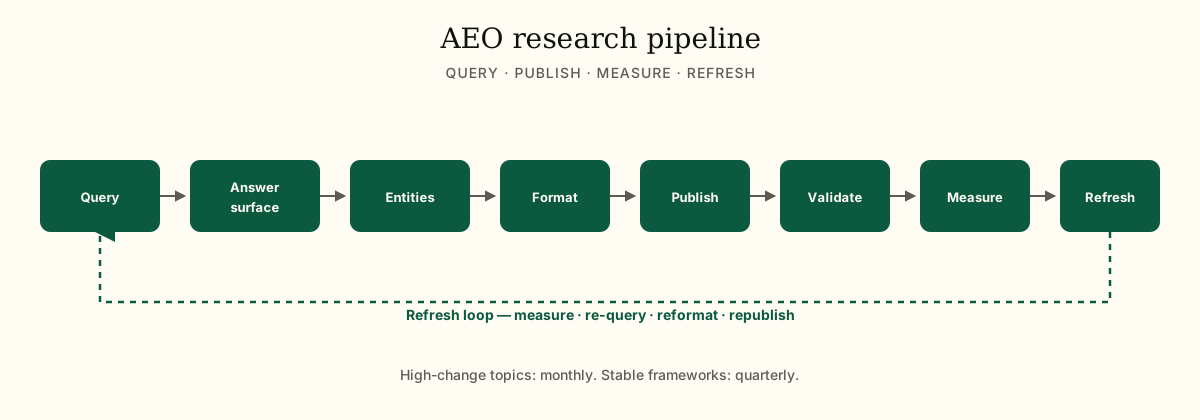
5) Publish -> validate -> measure -> refresh
AEO is iterative. Your competitive edge is refresh cadence:
- high-change topics (AI search behavior, tooling): refresh monthly
- stable frameworks: refresh quarterly
Tools I use in 2026 (practical stack)
- AI visibility tracking: Profound, Otterly (or equivalent)
- SEO suite with AI features: Semrush AI SEO Toolkit (or equivalent)
- Quick diagnostics: HubSpot AI Search Grader (fast sanity checks)
- Technical validation: Rich results/schema validator, crawling tools, server logs
- Analytics + CRM: GA4/GSC + CRM attribution to measure lead quality impact
E-E-A-T & Proof Layer
Answer engines don't read emotions, but they absolutely read trust signals. That's where E-E-A-T comes in: Experience, Expertise, Authoritativeness, and Trustworthiness.
E-E-A-T isn't a single "ranking factor", but it strongly influences inclusion confidence - especially when the engine has to decide which entity/page is safe to reuse in an answer.
What the engines look for in 2026
In my scoring model, E-E-A-T maps to signals like:
- Named author with a real footprint (bio, consistent profiles, credible history)
- Clear Organization + Person identity (consistent naming and "sameAs" profile links)
- First-party data or real case studies (vs generic blog fluff)
- Proof modules that match the claim (logos, outcomes, methodology)
- Fresh timestamps and honest update cadence
- Clean layout that matches "expert reference" patterns (tables, checklists, FAQs)
Proof assets that get reused in AI answers
If you publish these, you dramatically increase "safe citation" likelihood:
- Benchmarks (even small) with methodology
- Case studies written as: context → change → result → why it worked
- Templates/checklists that map to intent ("how to", "choose", "audit")
- Visuals that explain systems (simple diagrams, not decorative graphics)
- Reviews and third-party mentions that confirm your positioning
Author identity
On this page (and sitewide), make sure you have:
- Author name visible
- Short bio + credentials
- Link to About page
- Consistent links to authoritative profiles (LinkedIn)
- Organization identity consistent across the site
Keep it short. The job is to reduce uncertainty, not inflate authority.
Conversion Harmony - AEO x CRO
Let's be honest: structured content is great, but visibility without conversion is a vanity metric.
The challenge: answer-optimized pages often become minimalist, CTA-shy, and "reference-only".
In 2026, the highest-performing AEO content balances:
- clean, non-obtrusive conversion elements
- contextual CTAs aligned to the question intent
- CTA placement that doesn't interrupt extractable answer blocks
CTA design principles for AEO pages
- Use sticky headers or bottom CTAs - not disruptive popups
- Align CTA wording to the user's job at that moment
- Never inject CTAs mid-sentence in snippet-targeted blocks
- Put CTAs after: TL;DR, decision table, proof module, or checklist (intent flip points)
- Keep answer blocks clean and quotable
CRO for AI traffic
AI-influenced traffic tends to be:
- lower volume
- higher intent
- more assisted (brand recall often happens before the click)
So optimize for:
- fast clarity above the fold
- proof density (1–2 strong proof elements early)
- low-friction next step (book a fit check, download a checklist, run a scan)
AEO x CRO map
| Page Section | User Job | CTA | Proof or Support Element |
|---|---|---|---|
| FAQ block | get a fast answer | book a fit check | client logos or testimonial below |
| Comparison table | choose approach/vendor | request an audit | "what you get" bullets + mini case |
| Process overview | understand methodology | get the checklist | step-by-step list + sample output |
| Tool/calculator | validate numbers | try the calculator | explanation + assumptions |
| Proof/case study | reduce risk | talk to me | quantified result + constraints |
Ready to implement AEO for your content?
Get a custom AEO audit: entity mapping, schema gaps, answer-surface opportunities, and a prioritized roadmap.
Measurement & KPIs
AEO is only worth investing in if you can measure it.
Traditional SEO metrics (rank, CTR, impressions) don't capture:
- answer-surface visibility
- citation frequency
- brand mention sentiment
- AI-assisted conversions
So I use a hybrid approach: technical validation + AI visibility + conversion impact.
Core AEO metrics I track (updated for 2026)
| Metric | What it measures | How to track | Frequency |
|---|---|---|---|
| 1. AI Share of Voice (AI SOV) | % of tracked prompts where you're mentioned/cited | Prompt set testing across Google AI, Perplexity, ChatGPT, Copilot | Weekly |
| 2. Citation frequency | How often your pages are cited (not just mentioned) | AI visibility tools + manual validation for key prompts | Weekly |
| 3. Citation sentiment + framing | Are you recommended, neutral, or positioned as an alternative | Manual sampling + tagging (simple rubric) | Weekly/bi-weekly |
| 4. Prompt coverage | How many target questions you "own" (answer inclusion) | Maintain a prompt list by intent + funnel stage | Monthly |
| 5. Schema coverage score | % of priority pages with valid, aligned markup | Validator + crawl audits | Monthly |
| 6. Crawlability/readability health | Can bots fetch and extract the main content reliably | SSR checks + server logs + page snapshots | Monthly |
| 7. AI-assisted conversions (directional) | Impact on branded/direct and lead quality | GA4 + CRM attribution + "how did you hear about us" field | Monthly/quarterly |
Recommended tools (2026)
- AI visibility: Profound, Otterly (or similar)
- SEO tooling: Semrush AI modules (or equivalent)
- Diagnostics: HubSpot AI Search Grader (quick baseline)
- Analytics: GA4 + Search Console + server logs
- CRM: track lead quality and sales outcomes (not just form submits)
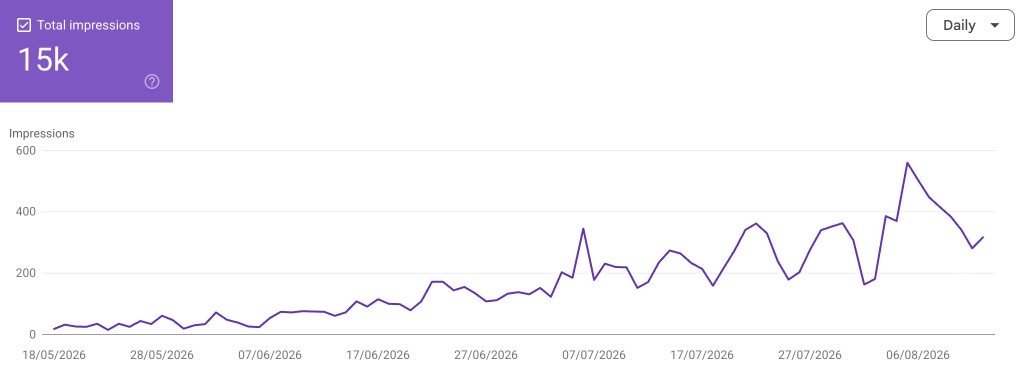
Google Search Console now reports Generative AI impressions separately from classic search. First-party example from this site:
Measurement rule that keeps you sane
Don't obsess over "sessions down". Track:
- citations up
- mentions up
- lead quality up
- assisted conversions improving
Measuring citations is not the same as being recommended as the specialist to hire. Implementation and measurement of entity, retrieval and named-recommendation work is AEO and AI-search consulting.
Playbooks & Templates (Reusable Blocks)
Speed up AEO implementation with reusable content blocks and templates. These patterns are designed to be extractable, citeable, and conversion-safe.
Template packs (updated for 2026)
1. FAQ Pack
Use for: product pages, service pages, help centers
- 6–12 questions that mirror real prompts
- short answers (40–90 words)
- optional collapsible UX (don't hide critical answers behind JS-only)
2. HowTo Pack
Use for: tutorials, setup guides, migrations
- 5–10 steps, each with action verb + constraint
- include "what breaks" and "how to validate" steps
3. Comparison Pack
Use for: "X vs Y", "best for", alternatives
- comparison table + "how to choose" rules
- honest trade-offs (this matters for trust)
4. Decision Framework Pack
Use for: "Which option is right for me?" content
- criteria-based rubric
- clear branching rules ("if X, pick Y")
5. Platform Prompt Set Pack
Use for: measurement and content planning
- 20–50 tracked prompts split by intent (definition, how-to, comparison, vendor selection)
- per platform: what shows up, who gets cited, what you need to publish next
6. Refresh Pack
Use for: keeping pages competitive in AI answers
- monthly refresh checklist (stats, examples, citations, screenshots, "last updated")
- quarterly audit checklist (entity consistency, internal links, proof module)
7. Crawl Control Pack
Use for: robots + llms.txt hygiene
- a short plan for what to allow vs block
- a curated list of "AI-ready" canonical pages to include in llms.txt
8. Multi-modal Pack
Use for: YouTube/audio support
- transcript structure: TL;DR → chapters → FAQs → links
- chapter naming rules (question-style)
FAQs
What's the difference between AEO and SEO?
SEO optimizes for rankings in traditional search results. AEO optimizes for answer surfaces: Google AI Overviews, Google AI Mode journeys, featured snippets, People Also Ask, and answer engines like Perplexity. AEO adds entity mapping, evidence structure, and citation-ready formatting on top of SEO fundamentals.
What's the difference between AEO and GEO?
GEO is the umbrella: optimizing visibility across generative systems. AEO is the practical execution layer: entity-first, answer-first, evidence-backed content that gets reused in AI answers.
Do I still need traditional SEO if I do AEO?
Yes. AEO builds on SEO fundamentals (technical SEO, authority, internal linking, relevance). You need both: SEO helps eligibility, AEO helps inclusion and citation.
Which schema types matter most in 2026?
Start with identity and content clarity: Organization, Person, Article. Then add FAQPage and HowTo only when the content matches. Use Product/Service for commercial pages and LocalBusiness for local/service pages.
How long does it take to see AEO results?
Schema validation can be immediate. Answer inclusion and citations usually take iteration: publish, measure inclusion across platforms, patch gaps, refresh proof. Treat it like a 30–90 day system, not a one-week tactic.
Can AEO hurt conversion rate?
Only if you over-optimize for extraction and remove persuasion. Done right (answer-first, then proof, then CTA), AEO tends to improve lead quality because AI-influenced clicks are often higher intent.
How do I track visibility in AI Overviews and AI Mode?
Use a tracked prompt set and measure: mention/citation presence, cited URLs, sentiment, and competitors cited. Tools help, but manual sampling is still necessary for accuracy.
What if competitors already show up in the answer?
Answer surfaces aren't winner-take-all. Multiple sources can be used. Win by being clearer, more structured, more evidence-backed, and more consistently updated than competitors.
Ready to implement AEO?
Answer Engine Optimization isn't a trend. It's the strategic front door for brands in the AI-first web.
In this playbook, you now have a practical system to:
- build entity-rich, structurally sound content
- format for inclusion, not just ranking
- integrate schema and trust signals without killing UX
- measure visibility beyond classic SEO KPIs
Ready to audit your AEO?
Run your content through my AEO scoring framework or request an Answer Visibility Audit. I'll analyze your entity mapping, schema gaps, platform-specific citation opportunities, and content structure - then turn it into a prioritized roadmap.
Published: October 2025
Last updated: February 2026
Last reviewed: February 2026
Helpful resources
- Rich results / schema validation
- Knowledge graph / entity references
- AI visibility tooling docs
Related: Best AEO checkers